
 Image 1 of 1
Arduino Compatible Leonardo R3 – ATmega32U4 Development Board
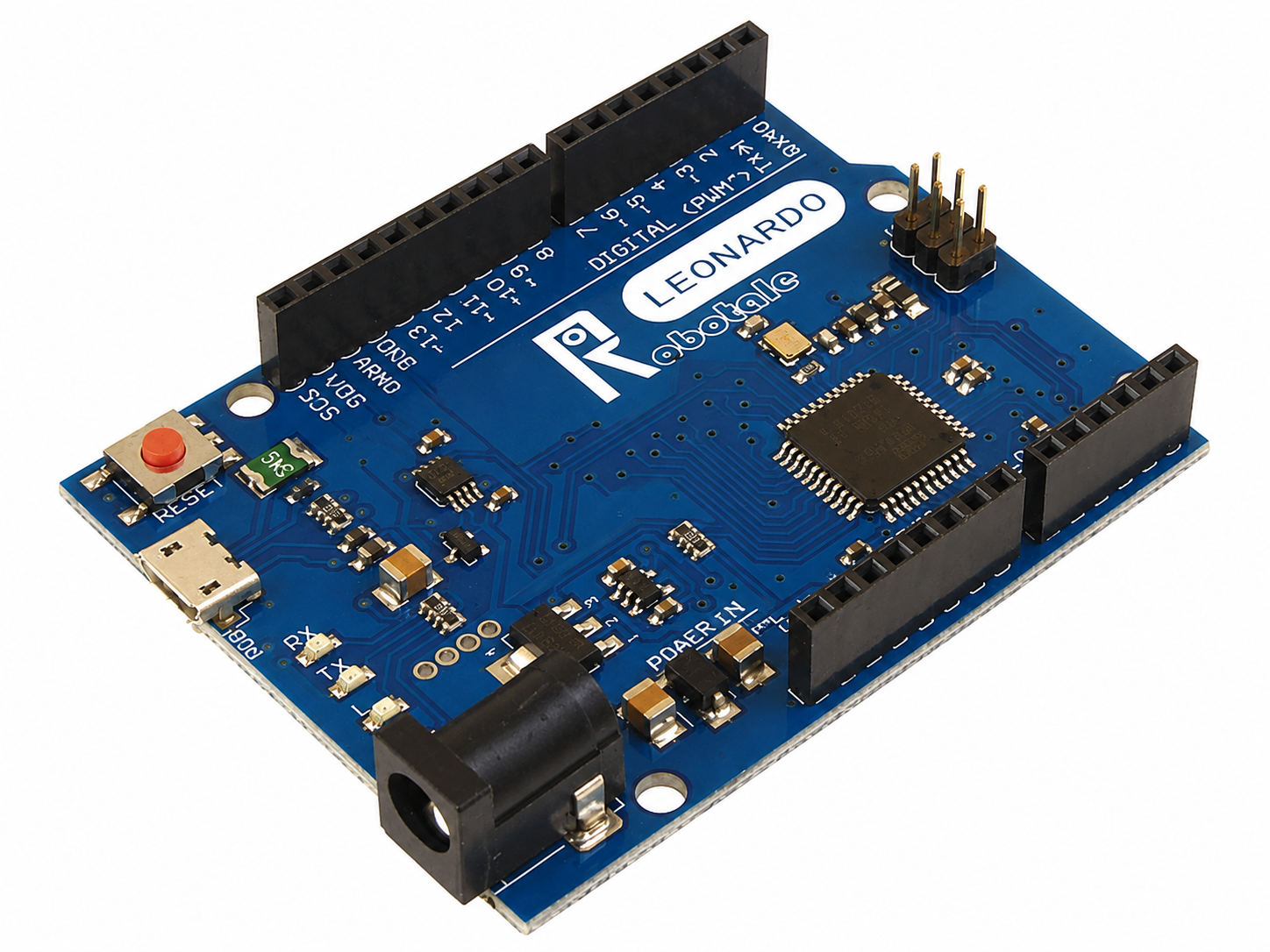
The Leonardo R3 Compatible Development Board is a versatile 5V microcontroller board based on the ATmega32U4, offering a particularly useful feature not found on many other Arduino-style boards: native USB support built directly into the microcontroller.
This means the board can communicate with a computer without requiring a separate USB-to-serial chip. More importantly, it can be programmed to identify itself as a USB keyboard, mouse or other HID device, making it an excellent choice for custom control panels, macro keyboards, button boxes, automation projects, test equipment interfaces and interactive electronics.
The board provides 20 digital I/O pins, including 7 PWM outputs, together with 12 analogue input channels. It also includes a 16 MHz clock, Micro-USB connection, DC power socket, ICSP header and reset button.
Programming is straightforward using the familiar Arduino IDE and Leonardo board support, with a huge range of libraries, tutorials and example projects available.
Why choose the Leonardo?
Unlike boards such as the traditional Uno, the ATmega32U4 handles USB communication itself. This gives the Leonardo some particularly interesting capabilities:
Native USB HID support – create keyboards, mice, macro pads and custom controllers
USB serial communication – communicate directly with applications running on a PC or Mac
20 digital I/O pins for sensors, switches, LEDs, relays and other hardware
7 PWM outputs for applications such as LED brightness and motor control
12 analogue inputs for reading sensors, potentiometers and analogue signals
Arduino IDE compatible – easy to programme with extensive community and library support
ICSP header for SPI communication and programming
Flexible power options – power through USB, the DC socket or external supply
Ideal for
The Leonardo is particularly well suited to:
Macro keyboards and shortcut controllers
Custom USB keyboards and mice
Simulator and gaming control panels
Electronics learning and prototyping
Robotics projects
Sensor and data-logging projects
Test equipment and PC interfaces
Home automation
Custom control systems
Specifications
SpecificationDetailsMicrocontrollerATmega32U4Operating Voltage5VRecommended Input Voltage7–12VInput Voltage Limits6–20VDigital I/O Pins20PWM Channels7Analogue Input Channels12Maximum DC Current per I/O Pin40 mA3.3V Pin Maximum Current50 mAFlash Memory32 KBBootloader Usage4 KBSRAM2.5 KBEEPROM1 KBClock Speed16 MHzUSB ConnectionMicro-USBUSB CapabilitySerial / CDC and HIDProgramming EnvironmentArduino IDE compatible
Arduino Compatible
This is an Arduino-compatible Leonardo R3 board based on the open-source Leonardo hardware design. It uses the ATmega32U4 microcontroller and is designed to work with the standard Arduino development environment and compatible Leonardo libraries and sketches.
It provides the functionality of the Leonardo platform at a considerably lower cost, making it an excellent board for experimenting, learning or permanently installing inside your own electronics projects.
Please note: This is a compatible development board and is not manufactured by Arduino.
The Leonardo R3 Compatible Development Board is a versatile 5V microcontroller board based on the ATmega32U4, offering a particularly useful feature not found on many other Arduino-style boards: native USB support built directly into the microcontroller.
This means the board can communicate with a computer without requiring a separate USB-to-serial chip. More importantly, it can be programmed to identify itself as a USB keyboard, mouse or other HID device, making it an excellent choice for custom control panels, macro keyboards, button boxes, automation projects, test equipment interfaces and interactive electronics.
The board provides 20 digital I/O pins, including 7 PWM outputs, together with 12 analogue input channels. It also includes a 16 MHz clock, Micro-USB connection, DC power socket, ICSP header and reset button.
Programming is straightforward using the familiar Arduino IDE and Leonardo board support, with a huge range of libraries, tutorials and example projects available.
Why choose the Leonardo?
Unlike boards such as the traditional Uno, the ATmega32U4 handles USB communication itself. This gives the Leonardo some particularly interesting capabilities:
Native USB HID support – create keyboards, mice, macro pads and custom controllers
USB serial communication – communicate directly with applications running on a PC or Mac
20 digital I/O pins for sensors, switches, LEDs, relays and other hardware
7 PWM outputs for applications such as LED brightness and motor control
12 analogue inputs for reading sensors, potentiometers and analogue signals
Arduino IDE compatible – easy to programme with extensive community and library support
ICSP header for SPI communication and programming
Flexible power options – power through USB, the DC socket or external supply
Ideal for
The Leonardo is particularly well suited to:
Macro keyboards and shortcut controllers
Custom USB keyboards and mice
Simulator and gaming control panels
Electronics learning and prototyping
Robotics projects
Sensor and data-logging projects
Test equipment and PC interfaces
Home automation
Custom control systems
Specifications
SpecificationDetailsMicrocontrollerATmega32U4Operating Voltage5VRecommended Input Voltage7–12VInput Voltage Limits6–20VDigital I/O Pins20PWM Channels7Analogue Input Channels12Maximum DC Current per I/O Pin40 mA3.3V Pin Maximum Current50 mAFlash Memory32 KBBootloader Usage4 KBSRAM2.5 KBEEPROM1 KBClock Speed16 MHzUSB ConnectionMicro-USBUSB CapabilitySerial / CDC and HIDProgramming EnvironmentArduino IDE compatible
Arduino Compatible
This is an Arduino-compatible Leonardo R3 board based on the open-source Leonardo hardware design. It uses the ATmega32U4 microcontroller and is designed to work with the standard Arduino development environment and compatible Leonardo libraries and sketches.
It provides the functionality of the Leonardo platform at a considerably lower cost, making it an excellent board for experimenting, learning or permanently installing inside your own electronics projects.
Please note: This is a compatible development board and is not manufactured by Arduino.